Why Indie Hackers Need a Smaller OpenClaw Workflow
Indie hackers want leverage, not another system to babysit. OpenClaw-style coding agents are attractive because they can turn a backlog of docs fixes, landing page experiments, refactors, and small bugs into finished branches while one human keeps product taste and launch judgment.
The trap is scale without control. A solo builder cannot spend the day hunting hidden terminal panes, leaked tokens, or half-finished changes across a shared checkout. Office Claws is not a native OpenClaw runtime; it is the desktop and VPS operations layer for OpenClaw-adjacent work, usually with Codex-backed agents where that is the practical execution path. If you are comparing runtimes first, start with OpenClaw vs Codex, then use this guide as the solo-operator playbook.
The Solo Builder Agent Loop
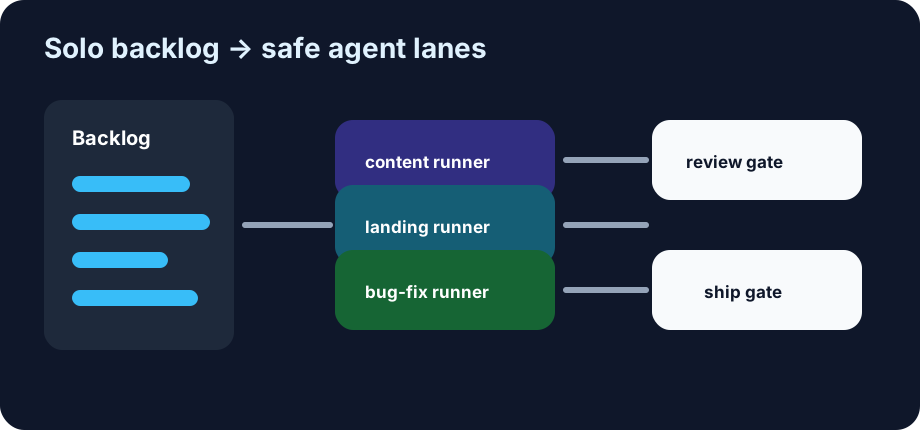
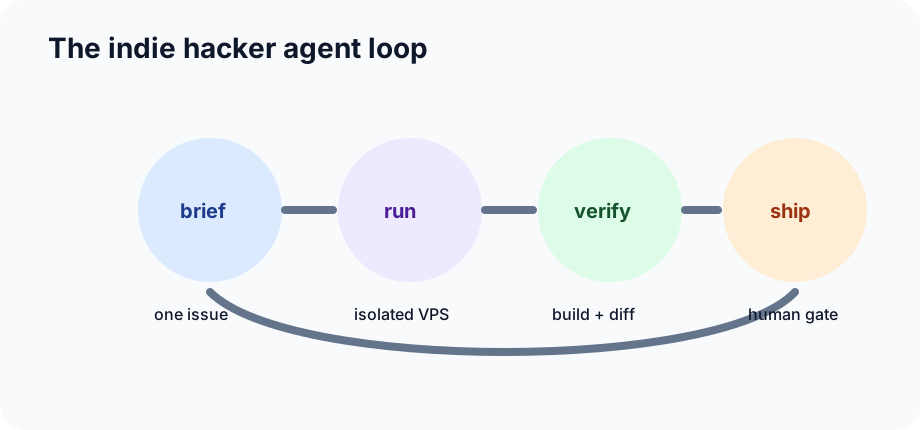
The safest indie workflow is repetitive on purpose: write a tiny brief, launch one isolated runner, review one branch, then decide whether to merge. That rhythm keeps autonomy useful without letting the agent become a second, messier founder.
| Step | Indie default | Guardrail |
|---|---|---|
| Pick | one narrow task from the backlog | no broad "improve the app" prompts |
| Run | one branch on one local or VPS runner | no shared dirty checkout |
| Watch | logs, status, and cost visible in Office Claws | stop early when it drifts |
| Verify | build, tests, screenshots, or content preview | evidence before merge |
| Ship | human-approved merge and deploy | production remains intentional |
This is where Office Claws for OpenClaw users earns its keep: it makes background work visible enough that a solo developer can run agents between customer support, marketing, and product decisions.
Best First Tasks for Indie Hackers
Start with work that has obvious acceptance checks. Landing pages, blog posts, test cleanup, dependency bumps, copy variants, and small UI polish are good first lanes. Pricing changes, auth, billing, and data migrations should stay human-led until the workflow has earned trust.
indie_hacker_agent_lanes:
  content:
    paths: ["website/content/**", "docs/**"]
    gate: "npx velite build && npm run build"
  landing_page:
    paths: ["website/src/**", "website/content/**"]
    gate: "npm run build and screenshot review"
  bug_fix:
    paths: ["backend/**", "frontend/**"]
    gate: "targeted tests plus human diff review"
  chores:
    paths: ["package.json", "docs/**"]
    gate: "lockfile diff and build output"
For remote execution, pair this with OpenClaw on VPS or the OpenClaw remote SSH workflow. A cheap VPS is often enough for docs, tests, and background refactors, while your laptop stays free for product thinking.
Keep Cost Predictable
Indie budgets are unforgiving. Every agent should start with a stopping rule: time box, token budget, allowed paths, and required proof. If the agent cannot show progress after the first checkpoint, stop it and rewrite the brief.
| Budget lever | Practical rule |
|---|---|
| Time | 30-45 minutes for content or small fixes |
| Runner | smallest VPS that can build the project |
| Scope | one issue, one branch, one validation command |
| Secrets | scoped tokens only, never a copied production .env |
| Merge | only after human review |
The OpenClaw cost comparison and OpenClaw token optimization guides go deeper on spend. The short version: run fewer, clearer tasks; stop wandering agents quickly; and keep expensive work near a review gate.
A Practical Weekly Cadence
A solo builder does not need a complex agent program. A useful cadence is enough:
- Monday: queue three small maintenance tasks.
- Midweek: run one feature-support task with a clear acceptance test.
- Friday: ask an agent to prepare release notes or docs from merged changes.
- Before any deploy: review the branch, build output, and rollback path.
That pattern gives indie hackers the useful part of OpenClaw-style autonomy: more parallel motion without surrendering taste, credentials, or production control. Office Claws sits around that loop as the practical control plane for visible runners, Codex-backed execution, and calm handoffs.