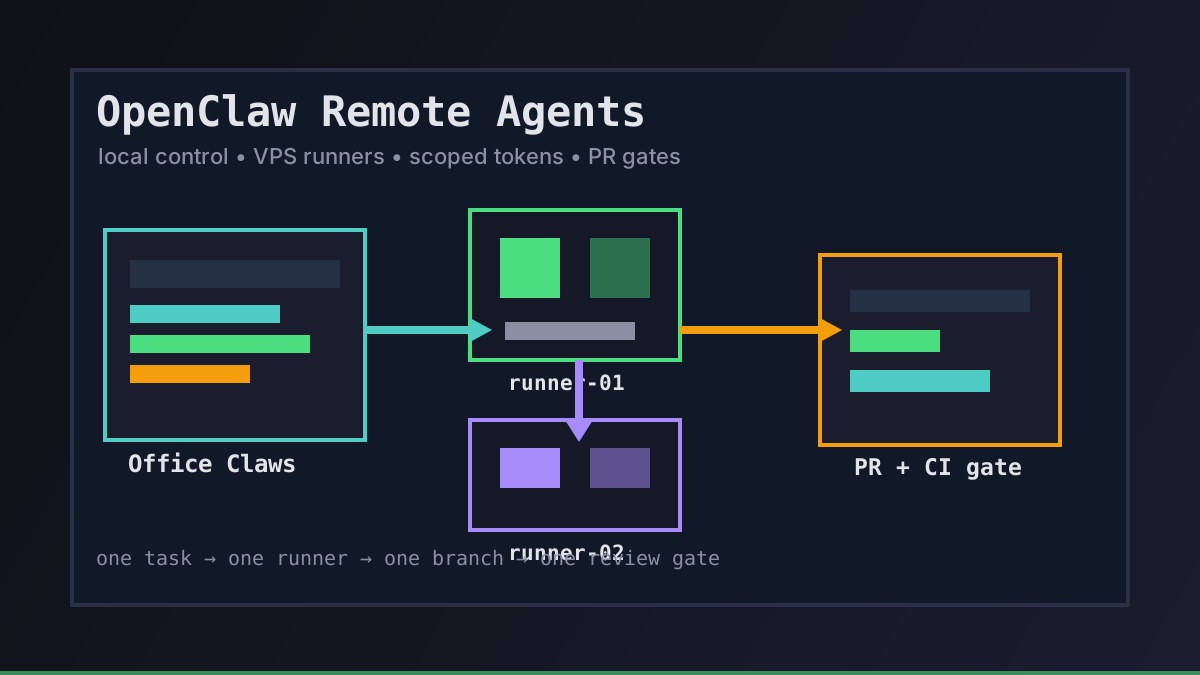
Why OpenClaw Remote Agents Need Rules
OpenClaw remote agents are useful when work should keep running after your laptop sleeps, when a build needs a stable network location, or when several tasks should move in parallel. They also create a new operating problem: a remote shell can become a hidden production system if nobody defines its boundaries.
Office Claws is not a native OpenClaw runtime. The honest pattern is to use it as the desktop control layer for OpenClaw-adjacent work: local approvals, VPS runners, visible logs, and Codex-backed execution where that is the practical runtime. If you are still choosing the execution model, start with OpenClaw vs Codex and Office Claws for OpenClaw users.
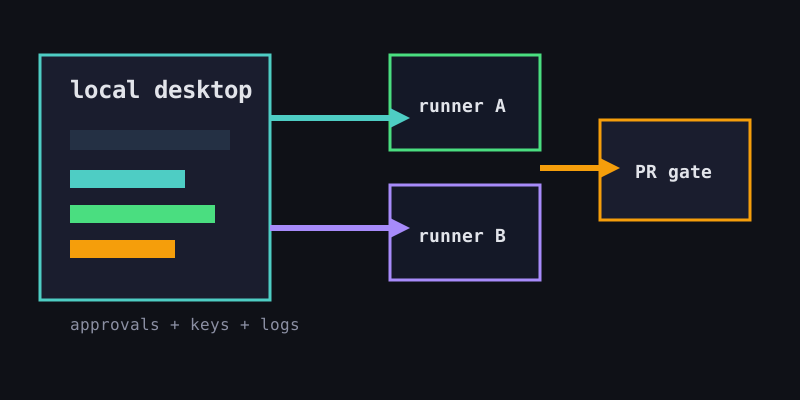
The Remote Agent Contract
A remote agent should start with a small contract. The contract says what the runner owns, which credentials it can touch, how it reports progress, and when it must stop.
| Contract item | Safe default | Why it matters |
|---|---|---|
| Runner | One VPS runner per task | prevents agents from editing the same checkout |
| Branch | Fresh branch from main | keeps review and rollback simple |
| Credentials | Short-lived repo token | limits damage from prompt injection or shell mistakes |
| Logs | Streamed back to the desktop | makes silence visible |
| Stop rules | Ask before secrets, deploys, deletes | keeps humans in the trust boundary |
That is the core difference between an agent and an unattended terminal. The agent can work remotely, but the operator still owns scope, budget, and review.
A Reference Workflow
Use the same shape for most OpenClaw remote agents: brief, provision, run, checkpoint, validate, and review. The runner should be durable enough to finish work and disposable enough to destroy without drama.
task=fix-checkout-webhook
runner=vps-remote-03
branch=agent/fix-checkout-webhook
scope=backend/webhooks, website/src/app/billing
credentials=repo-write-token, expires=2h
stop_if=needs production secret, migration deletes data, diff exceeds 600 lines
validation=go test ./... && npm run build
This pairs naturally with OpenClaw monitoring, OpenClaw background tasks, and OpenClaw remote runner architecture. Remote agents are not safer because they are remote. They are safer when every remote action is visible, scoped, and reviewable.
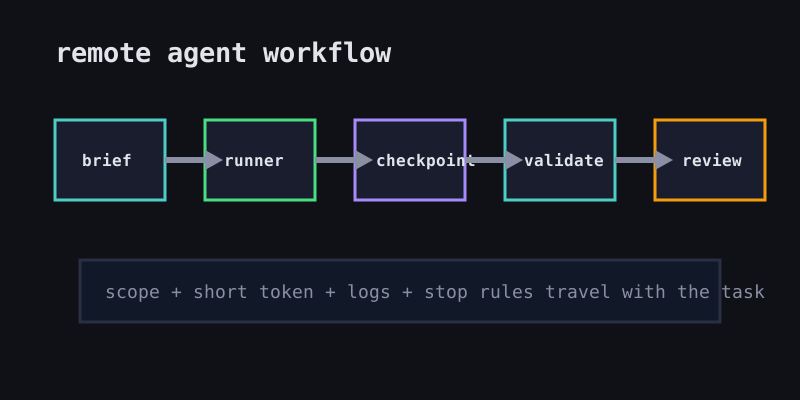
Boundaries Before Scale
Do not scale remote agents before the safety model is boring. A pool of ten VPS runners with shared .env files is not an operations layer; it is a larger blast radius.
Use these defaults:
- Keep long-lived model and provider keys local where possible.
- Give each runner only the repository, branch, and token it needs.
- Route deploys through CI instead of giving agents production credentials.
- Record the runner, branch, token expiry, and validation command for every task.
- Tear down or clean the runner after merge, failure, or credential exposure.
For the deeper version, pair this with OpenClaw security best practices, OpenClaw sandbox, and OpenClaw secrets management.
Recommended Office Claws Setup
Start with one remote agent per high-value task. Use Office Claws as the local operator view: create the task, provision or select the VPS runner, keep approvals visible, watch logs, and push a branch for CI and human review. Codex-backed execution is the practical fit when the goal is to ship code through a normal GitHub workflow.
The recommendation is simple: do not treat remote agents as magic workers. Treat them as temporary teammates with a clear ticket, a clean branch, limited credentials, and a review gate. That gives OpenClaw-style teams more parallel work without turning every VPS into a mystery terminal.
Related Reading
- OpenClaw vs Codex — compare runtime and operating tradeoffs.
- Office Claws for OpenClaw users — local desktop control for remote agent work.
- OpenClaw monitoring — logs, status checks, and stuck-runner recovery.